Worth Williams doesn’t remember a time in his childhood when he wasn’t on the family farm.
His mother, Donna Williams, had a pack-and-play for him in her office soon after he was born. The family jokes that she timed his birth for a Friday so she wouldn’t miss payroll the following Thursday.
He’s the sixth generation in this long-standing tradition of life on the farm at Worthington Farms near Greenville, North Carolina. Isaac Worthington bought land there in 1837.
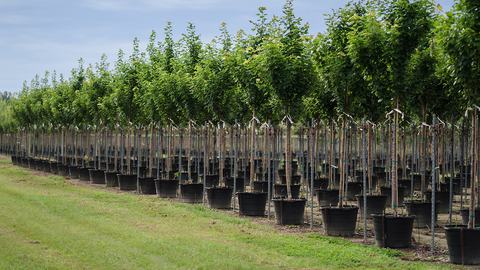
And over the course of nearly two centuries, each generation has proven its ability to adapt with the times. Worthington Farms initially produced tobacco, later adding row crops, livestock and poultry, and then a plant nursery. In 1990, it became the first North Carolina nursery to adopt “pot-in-pot” container production, which allows plants to be transplanted safely during the growing season.
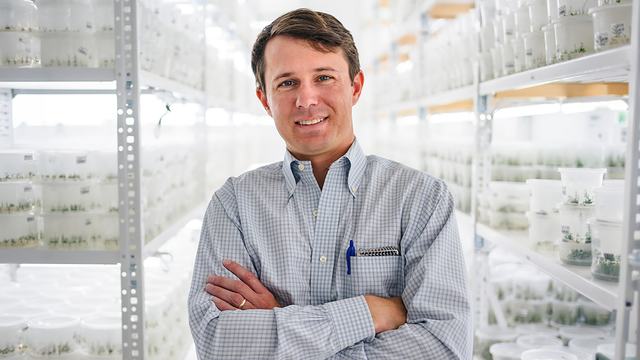
So it comes as no surprise that Williams’ approach to innovation is no different. In 2019, he expanded his role as farm manager to kick-start Worthington Farms’ next innovation: PhyllaTech LLC, a tissue culture lab that propagates plants primarily for the commercial berry industry.
His success in both roles comes, in part, from a degree in horticultural science from NC State University’s College of Agriculture and Life Sciences (CALS) and later attending CALS’ Executive Farm Management Program, which laid the groundwork for turning a seed of an idea into PhyllaTech.
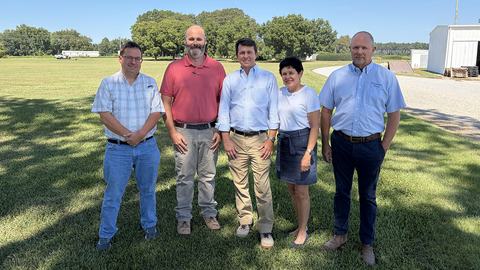
Worthington Farms employees who have participated in CALS Executive Farm Management Program (from left to right): Gary Whitehurst, Joseph Capps, Worth Williams, Donna Worthington Williams and Mike Worthington.
Worthington Farms employees who have participated in CALS Executive Farm Management Program (from left to right): Gary Whitehurst, Joseph Capps, Worth Williams, Donna Worthington Williams and Mike Worthington.
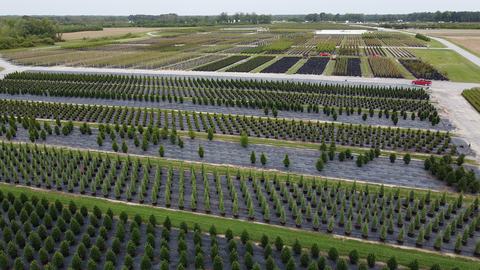
An aerial view of Worthington Farms container nursery production
The Next Generation in His Pack
Williams enrolled at NC State in 2007. He comes from a long line of Wolfpack graduates and fans, and says he really didn’t think too much about going anywhere else. His paternal grandfather was the first in his family to attend in the 1950s. Donna and his father, Tod, are CALS graduates, as well as an uncle and cousin.
He majored in horticultural science with a minor in agricultural business and took some time to complete his degree. After his first 18 months at NC State, Williams came home and worked for about the same amount of time on the farm. When he went back to finish his degree at NC State, he says he had a different focus with that real-world experience layered under the classwork.
Though PhyllaTech was still years away, those early science courses were important, Williams says. Plant physiology and genetics classes he didn’t expect to use laid the foundation for a company he’d later dream up.
Time in the CALS Horticulture Club also proved pivotal. When Williams later launched PhyllaTech, he hired his first employees straight out of that same student group.
Cultivate Your Education
Opportunity is in full bloom in the Department of Horticultural Science. With associate’s, bachelor’s and graduate degrees, students can flourish along various horticultural paths through hands-on learning and research opportunities.
Williams returned to Worthington Farms following completion of his undergraduate degree, working on the tobacco operations side, which he says was stable but not fast-growing.
“I don’t like sitting still, I like to see growth,” he says.
He began to consider taking part in CALS’ Executive Farm Management Program (EFM) and, in 2019, convinced his mother to attend with him as well. EFM operates through NC State Extension in partnership with Clemson University, East Carolina University and the University of Georgia. The program is designed for farm owners and operators who want to improve the profitability and long-term success of their operations. Over two weeks, attendees cover topics including financial management, strategic planning, risk management, succession planning and leadership. EFM also provides an opportunity to network with other farmers, something Williams says he valued.
“Sometimes you get stuck in a bubble in your own operation,” he says.
It was during EFM that Williams began sketching the idea for a tissue culture lab targeting the commercial berry industry, and PhyllaTech was born.
“In a way, PhyllaTech is almost a product of EFM,” Williams says.
Explore the Business of Farming
The Executive Farm Management Program at NC State is an intensive, two-week professional development experience designed for progressive farm owners, operators and decision-makers. The next session begins Jan. 17, 2027.
And that comes full circle to the family’s long-term ability to adapt with the times — going back to those shifts from tobacco to row crops to nursery crops.
PhyllaTech’s lab focuses on blackberries, raspberries and blueberries, which have proven to be crops people simply keep buying no matter the economic environment, Williams says. What started with two employees hired from NC State’s Horticulture Club has grown into a 35-person operation. He hopes to push further into contract work with biotechnology firms in Research Triangle Park.
“We’re producing hundreds of thousands of plants through tissue culture,” Williams says.
Williams describes himself as “a master delegator” who avoids micromanaging, in part because it’s what he’d seen his grandfather model.
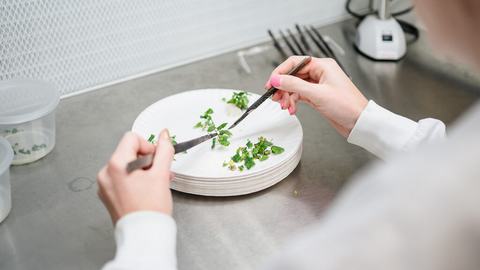
A technician works on tissue transfers under a fume hood in the PhyllaTech lab.
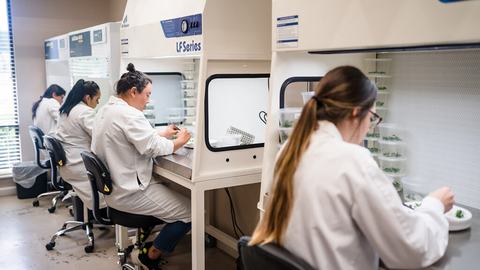
Lab technicians working under laminar flow hoods at PhyllaTech.
That philosophy extends to family leadership across the farm as well. Williams’ sister, an attorney, handles human resources and keeps PhyllaTech’s books. His mother is the president of Worthington Farms, while his uncle and father serve as vice presidents. A great-uncle oversees tobacco operations for the farms.
And the family’s connection to NC State continues to grow. Between the nursery and the lab, Williams estimates at least eight NC State graduates sit on the combined leadership team, both family and non-family.
“In my lifetime, this is the best leadership team we’ve ever had,” he says.
For the Next Generation
Reflecting on his journey, Williams’ advice for CALS students keeps that same focus on changing with the times, but in a measured way: embrace new technology, but don’t chase every product out there.
Lean on research and outside advisers willing to tell the truth when they think a decision is a bad one, he says. And for those without land waiting for them, he suggests seeking out farmers nearing retirement who are looking to develop a succession plan.
As Worthington Farms and PhyllaTech have proven, adaptation is key.
“The only constant is change,” Williams says. “We’re always changing, and that’s why we are where we are today.”